Feeling unheard in a relationship can be incredibly frustrating.
You might have tried explaining how you feel several times. You may have chosen your words carefully, waited for the right moment and tried not to sound critical.
But somehow, you still come away from the conversation feeling as though your partner doesn’t really understand.
You might find yourself thinking:
Why don’t they understand what I’m trying to say?
Why do I have to keep explaining this?
Are they actually listening to me?
Why does every conversation about my feelings turn into an argument?
Over time, feeling unheard can create distance between two people, even when both still care deeply about the relationship.
Being Heard Is About More Than Listening
Your partner might genuinely listen to every word you say and you can still leave the conversation feeling unheard.
That’s because feeling heard isn’t simply about someone remaining quiet while you speak.
Often, what we’re looking for is some sense that the other person understands the emotional meaning behind what we’re saying.
For example, you might say:
“I feel like we’re spending less time together lately.”
Your partner might hear this as:
“You’re not doing enough.”
But what you may actually be trying to communicate is:
“I miss feeling close to you.”
When the emotional message underneath the words isn’t recognised, both people can end up responding to very different conversations.
Why Does Everything Turn Into an Argument?
When someone feels unheard, they often try harder to explain themselves.
You might repeat the point.
Give more examples.
Explain what happened last week.
Remind your partner about another similar situation.
Your intention may simply be to help them understand.
But from your partner’s perspective, the conversation can begin to feel like criticism.
They become defensive.
You become frustrated because they’re defending themselves instead of listening.
You explain yourself more strongly.
They become even more defensive.
Before long, you’re arguing about how you’re talking rather than the issue you originally wanted to discuss.
This kind of pattern can become familiar in relationships. I explore it in more detail in Why Do We Keep Having the Same Argument? Understanding Relationship Conflict.
Sometimes We Listen to Respond, Not to Understand
It’s difficult to really listen when we feel criticised, blamed or threatened.
Instead of hearing what our partner is trying to tell us, we start preparing our response.
“That’s not what happened.”
“But you do the exact same thing.”
“That’s unfair.”
“I only did that because you…”
The conversation becomes about establishing who is right.
But many relationship conversations don’t actually need a winner.
Your partner’s experience can be valid even if you remember the situation differently.
Understanding how someone feels doesn’t necessarily mean agreeing with every part of their interpretation.
Sometimes what a person needs most is simply:
“I can see why that hurt you.”
“I Keep Telling Them What I Need, but Nothing Changes”
Feeling heard also involves what happens after the conversation.
Your partner might listen carefully, apologise and tell you they understand.
But if the same situation continues happening, you may eventually stop believing that talking about it makes any difference.
This can be particularly painful.
The issue is no longer just the original problem.
It becomes:
“I’ve told you how important this is to me, and nothing has changed.”
Repeated experiences like this can gradually create resentment.
You may become more frustrated when raising concerns because you’re not only reacting to what happened today. You’re carrying all the previous conversations where you felt nothing changed.
Feeling Unheard Can Become Feeling Lonely
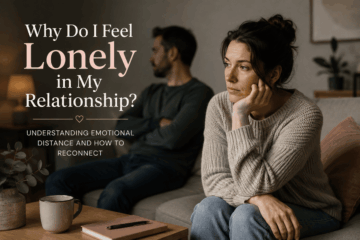
One of the difficult things about feeling unheard is that it can create loneliness within a relationship.
You might still spend plenty of time together.
You might share a home, organise family life, talk about work, make plans and manage all the practical parts of being a couple.
Yet emotionally, something can feel missing.
You don’t necessarily want your partner to fix everything.
You want to feel understood.
When that connection isn’t there, you can start feeling alone even when you’re sitting beside the person you love.
This is something I explore further in Why Do I Feel Lonely in My Relationship?
Are You Asking for Understanding or a Solution?
Sometimes couples approach conversations differently.
One person talks about a problem because they want to feel understood.
The other hears a problem and immediately tries to solve it.
For example:
“I’m completely overwhelmed with work at the moment.”
might be met with:
“Why don’t you talk to your manager?”
That might be perfectly reasonable advice.
But perhaps the person wasn’t asking for advice.
They wanted:
“That sounds exhausting. You’ve had so much on lately.”
Neither response is necessarily wrong.
The difficulty comes when one partner repeatedly offers solutions while the other is looking for emotional connection.
Sometimes simply asking:
“Do you want me to listen, or would you like help figuring out what to do?”
can completely change the tone of a conversation.
Why Timing Matters
Important conversations don’t always happen at good times.
You might finally build up the courage to raise something just as your partner walks through the door after a difficult day.
Or an issue comes up late at night when you’re both exhausted.
Perhaps you start discussing something while one of you is trying to get the children ready, answer an email or leave the house.
When someone is already stressed or distracted, their ability to listen properly is reduced.
That doesn’t mean the conversation isn’t important.
It may simply mean it deserves a better moment.
You could try:
“There’s something I’d really like to talk about. Is now okay, or could we find some time later tonight?”
That small change can make the conversation feel less like an unexpected confrontation.
What Does Feeling Heard Actually Look Like?
Healthy communication doesn’t mean agreeing about everything.
It means being able to stay curious about each other’s experience, even when you see things differently.
Feeling heard might sound like:
“I hadn’t realised you were feeling that way.”
“Can you help me understand what upset you?”
“I can see why that was important to you.”
“I don’t remember it exactly the same way, but I understand why you felt hurt.”
“What would you need from me next time?”
These responses don’t require either person to abandon their own perspective.
They simply make space for another one.
My article What Does Healthy Communication Actually Look Like? explores more of these patterns.
What If I Don’t Feel Safe Saying How I Feel?
There is an important difference between ordinary communication difficulties and being afraid of your partner’s reaction.
If you regularly feel that you cannot express your feelings because you fear intimidation, threats, humiliation, retaliation or controlling behaviour, this goes beyond simply improving communication techniques.
In those circumstances, individual support and appropriate specialist services may be more suitable than approaching the problem as something both partners simply need to communicate better about.
How Can We Start Communicating Differently?
You don’t necessarily need to solve every issue in one conversation.
Sometimes changing the pattern is the first step.
You might try focusing on one issue rather than bringing several previous disagreements into the conversation.
Speak about your own experience rather than assuming your partner’s intention.
Instead of:
“You don’t care about spending time with me.”
you might say:
“I’ve been feeling disconnected from you lately, and I’d really like us to have more time together.”
And when your partner is speaking, try to understand what they’re saying before explaining your own side.
You can disagree later.
Understanding doesn’t require agreement.
When Relationship Counselling Can Help
Sometimes couples know they’re stuck in an unhealthy communication pattern but can’t find a way out of it.
One person feels ignored.
The other feels constantly criticised.
One pushes harder for a conversation.
The other withdraws because conversations feel overwhelming.
Both people may end up feeling misunderstood.
Relationship counselling can provide a space to slow these interactions down and understand what’s happening underneath them.
Rather than deciding who is right or wrong, therapy can help couples recognise the patterns they’ve developed, communicate their needs more clearly and begin hearing what the other person is actually trying to say.
You don’t need to wait until a relationship is at breaking point before seeking support.
Sometimes couples come to therapy precisely because they care about the relationship and don’t want resentment or distance to continue growing.
Feeling Heard Starts With Understanding
Feeling unheard doesn’t necessarily mean that your partner doesn’t care about you.
Sometimes two people care deeply about each other but have fallen into ways of communicating that leave neither person feeling understood.
One person talks louder because they desperately want to be heard.
The other retreats because they feel attacked.
Both reactions then reinforce the other.
Recognising that pattern can be the beginning of changing it.
The goal isn’t perfect communication.
It’s creating a relationship where both people have enough space to say:
“This is how I’m feeling.”
And enough safety to hear:
“I want to understand.”
If you’ve recognised yourself in this article and would like support, I offer online counselling and psychotherapy for clients across Ireland. You can find out more or book an initial appointment on my Contact page.


0 Comments