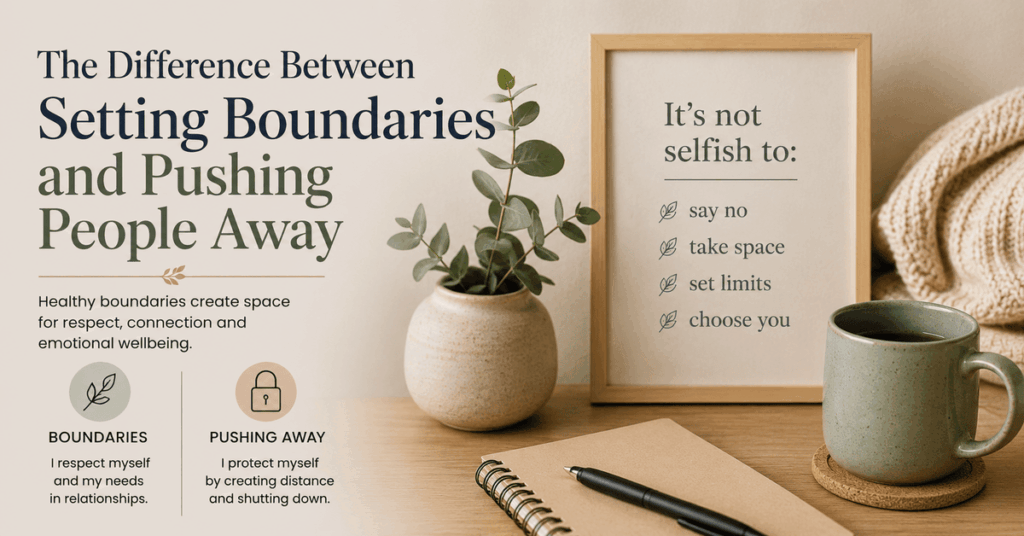
The Difference Between Setting Boundaries and Pushing People Away
Many people struggle with boundaries because they worry that saying no, asking for space, or expressing their needs will hurt others.
As a result, they often find themselves caught between two extremes:
- Saying yes to everything and becoming overwhelmed.
- Pulling away completely when things feel too much.
Healthy boundaries sit somewhere in the middle.
Understanding the difference between setting boundaries and pushing people away can help you build healthier, more balanced relationships without sacrificing your own wellbeing.
Providing online counselling and psychotherapy for clients across Ireland and internationally experiencing anxiety, stress, burnout and relationship difficulties.
What Are Healthy Boundaries?
Boundaries are the limits we set to protect our emotional, physical and mental wellbeing.
They help us communicate:
- What we are comfortable with
- What we need
- What we are not willing to accept
- How we want to be treated
Boundaries are not walls designed to keep people out.
They are guidelines that help relationships function in a healthy and respectful way.
Examples of healthy boundaries might include:
- Saying no when you genuinely do not have capacity
- Asking for time to think before making a decision
- Protecting personal time and space
- Expressing your feelings honestly
- Limiting contact with people who repeatedly disrespect you
Healthy boundaries allow connection while also protecting your wellbeing.
What Does Pushing People Away Look Like?
Pushing people away is different.
Rather than creating healthy limits, it often involves emotionally distancing yourself from others altogether.
This can look like:
- Avoiding difficult conversations
- Withdrawing when relationships become emotionally close
- Ignoring messages or calls
- Refusing support when you need it
- Keeping people at a distance
- Ending relationships abruptly when conflict arises
Pushing people away is often driven by fear rather than healthy self-protection.
The goal is usually to avoid vulnerability, discomfort or potential hurt.
Why People Confuse Boundaries with Rejection
Many people grew up believing that putting themselves first was selfish.
Others learned that keeping people happy was the safest way to maintain relationships.
As a result, setting boundaries can feel uncomfortable.
Thoughts such as these are common:
- “They’ll be upset with me.”
- “They’ll think I’m selfish.”
- “What if they stop liking me?”
- “I’m letting them down.”
Because boundary-setting can trigger guilt, some people avoid it altogether until they become overwhelmed.
When this happens, they may eventually withdraw completely instead.
The Signs of Healthy Boundaries
Healthy boundaries often involve:
- Honest communication
- Respect for yourself and others
- Consistency
- Self-awareness
- Flexibility where appropriate
For example:
“I care about you, but I don’t have the capacity to help with that right now.”
Or:
“I need some time to myself this weekend to recharge.”
Boundaries allow connection while recognising that your needs matter too.
The Signs You May Be Pushing People Away
You may be pushing people away if you notice that you:
- Withdraw whenever relationships become emotionally close
- Avoid asking for help
- Feel uncomfortable receiving support
- Cut people off quickly after disagreements
- Struggle to trust others
- Prefer complete distance rather than honest conversations
These patterns often develop as protective strategies but can leave people feeling isolated and disconnected.
Why Boundaries Are Essential for Mental Health
Without boundaries, many people experience:
- Burnout
- Emotional exhaustion
- Anxiety
- Resentment
- Relationship difficulties
- Chronic stress
Boundaries help create healthier relationships because they allow people to connect from a place of honesty rather than obligation.
They also reduce the likelihood of resentment building beneath the surface.
Learning to Set Boundaries Without Guilt
If boundaries feel difficult, start small.
You do not need to change everything overnight.
Try:
Pausing Before Saying Yes
Give yourself time to consider what you genuinely want before committing.
Checking In With Yourself
Ask:
“Do I actually want to do this?”
or
“Do I have the emotional capacity for this right now?”
Accepting That Discomfort Is Normal
Setting boundaries may feel uncomfortable initially.
That discomfort does not mean you are doing something wrong.
Remembering That Boundaries Strengthen Relationships
Healthy relationships can tolerate reasonable boundaries.
In fact, boundaries often improve relationships by reducing resentment and increasing honesty.
How Therapy Can Help
Therapy can help you understand why boundaries feel difficult and explore the patterns that may be keeping you stuck.
Together we can explore:
- People-pleasing
- Fear of rejection
- Relationship anxiety
- Self-worth
- Emotional overwhelm
- Healthy communication
- Building confidence in expressing your needs
The goal is not to become distant or disconnected.
The goal is to create relationships where both your needs and the needs of others can be respected.
Final Thoughts
Setting boundaries and pushing people away are not the same thing.
Boundaries create healthy space for connection and self-respect.
Pushing people away often creates distance driven by fear, overwhelm or self-protection.
Learning the difference can help you build stronger, healthier relationships while protecting your own wellbeing.
If you find it difficult to express your needs, set boundaries or maintain healthy relationships, therapy can help you understand these patterns and develop new ways of relating to yourself and others.
Online Counselling & Psychotherapy
I provide online counselling and psychotherapy for clients across Ireland and internationally experiencing anxiety, stress, burnout, relationship difficulties and emotional overwhelm.
Sessions offer a confidential and supportive space to explore relationship patterns, boundaries and emotional wellbeing.

0 Comments